Friday, March 16, 2007

First Look At Clone Wars

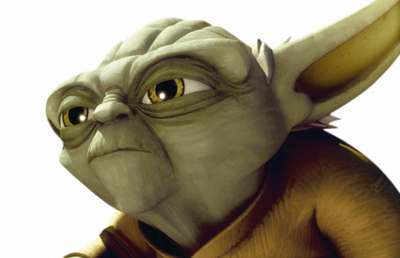
Yoda
A first look at Yoda, from the new Star Wars: Clone Wars television series.

This picture of Yoda was recently unveiled by StarWars.com. It's the first official image that has been released from Lucasfilm's upcoming animated Clone Wars TV series. The show reportedly makes extensive use of Zviz, ILM's new proprietary Machinima/real-time animation system.

Via Flooby Nooby.

Wednesday, March 14, 2007

Panda Puppet: Head Control Test #3


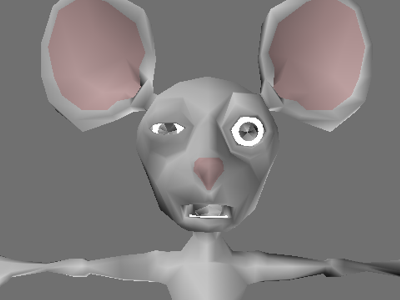
Another Panda Puppet head control test; this time I wanted to experiment by mapping controls to a pre-existing character rigged for conventional animation so I used a fun looking mouse character created by a Blender user named "Clean3D" (the original mouse rig can be downloaded here). In the video I first demonstrate some very basic actions and then show how they can be mixed together to create different types of movements and expressions. I couldn't get as much control out of the rig as I would have liked, simply because the way it was build isn't ideal for Panda Puppet, but it still turned out pretty well.

Mouse rendered using real-time graphics

Of course these real-time graphics leave something to be desired. I am still working on the programming that will record real-time performances to Blender animation, but here's what a final render of the real-time frame above would look like:

Final Mouse render

Not too bad. Thanks again to Clean3D for the great Mouse rig!

Tuesday, March 13, 2007

Controlling Video With Hand Gestures


A company called Gesturetek has some very interesting looking technology that allows you to control video using hand gestures. It's essentially a more sophisticated version of Puppet Show, which I've mentioned here before. As you can imagine from this brief video, there are lots of potential puppetry applications for something like this.

Monday, March 12, 2007

What you could do in Machinima

Brian Stokes, whose blog I always enjoy reading, linked to the fantastic French student animation film Burning Safari a little while ago alluded to the fact that it's difficult to do something like it in Machinima. While I agree completely that it would be nearly impossible to make Burning Safari with most existing Machinima and digital puppetry tools, after spending sometime looking at the films in terms of what I am working on with Panda Puppet I think this type of animated film could definitely be done using real-time techniques.

As a theoretical exercise I broke down the main sections of the film and I'll describe here how would approach them using digital puppetry techniques:


The Spaceship Landing - Easy enough to do, lots of video games already have vehicles like this in them. `Nuff said.


The Little Robots - These guys sure are cute. There are two possibilities for performing them that I can imagine; the simplest way would be to create walk cycles for them and then having a puppeteer simply control their X-Y movement within a scene. Another possibility would be to use a data glove on a flat surface like a table with each leg controlled by a different finger. This would allow more spontaneous and specific control, but running around might be difficult if you didn't have a large enough space to perform in.


"Robo-Vision" - To be perfectly honest, I would cheat this shot in After Effects.


The Monkey - Boy, I love monkeys. There's just something funny about them. In fact, he bares a striking resemblance to "Suzanne" the Blender monkey-head primitive. Controlling a character like this will be relatively straight forward with a control system like Panda Puppet.


See Monkey Get Mad - The only thing funnier than a monkey is an angry monkey. This type of moment in a scene seemed like a real challenge at first, but I have been playing with an idea I call "Emotion State Control" which would influence the movements and poses of a character according to the character's emotion state. If the emotion state "happy" is assigned to a joystick's trigger as long as the trigger is pressed all of the "happy" versions of different movements and poses would be used.


See Monkey Run - Once again, running is done using simple walk cycles. Leaping, jumping, etc. is fairly easily using a combination of walk-cycles and physics. Even the squash and stretch is fairly easy to achieve.


See Monkey On Fire - Ragdoll physics would work nicely in this situation. I would do the energy squares or whatever the robots are chucking at the monkey and the fire on the monkey's face in post using After Effects or something similar.

The other big problem that needs to be addressed is image quality. The graphics in real-time rendering are tied to a computer's ability to draw polygons onscreen. The more polygons a computer can draw and the faster it can draw them, the better the graphics. So having high resolution real-time graphics is really just a matter of having enough computational power. With enough of it, theoretically, you can render graphics of this quality in real-time. In fact I've seen real-time 3D demonstrations that exceed the quality of Burning Safari. Another work around is to simply do performances in real-time at low resolution and then render out higher quality resolution frame by frame afterwards.

There you have it, easy-peasy. Well, almost.

I don't mean to suggest that something being technically doable means it's easy artistically. Making great films is hard no matter how you do it. And even when I get Panda Puppet or someone else gets another digital puppetry system to the point where it can do all this all it will be is just a great tool. Having great tools is awfully nice, but what ultimately makes great art is a great artist.
Sunday, March 11, 2007

Blender Gets Even Better

Plans are afoot to add motion tracking capability to Blender. This is still in the earliest stages of development, but it looks like the idea is to add the ability to both match-move camera shots and track motion on a object that can be assigned to Blender controls. These were two huge features I really wanted for Panda Puppet (and dreaded the prospect of having to code on my own) and now it looks like they'll end up built right in to Blender.

How cool is that?

Saturday, March 10, 2007

Panda Puppet: Head Control Test #2


A second head control test, just some basic left/right movement, but now with an articulated jaw for extremely basic lip sync is possible. The second clip utilizes deformation to create a squash/stretch effect as the mouth opens. The third clip has two different keyposes triggered by pressing different joystick buttons. I also smoothed out the surface of the head for the second and third clips. It's all very crude still, but coming along nicely I think.

Work on this will continue through the weekend...

Friday, March 09, 2007

Nintendo - A Digital Puppetry Pioneer


Most people don't know this, but Nintendo is something of a pioneer in the field of digital puppetry. Since 1994 they have been using a system they call MIRT ("Mario in Real-Time") to have many of their iconic characters like Mario appear at trade shows and in-store promotional events. The clip of MIRT in action above shows everyone's favourite Italian plumber bashing Sony, doing a Jack Nicholson impersonation and re-enacting a scene from Star Wars.

The earliest version of MIRT was a facial tracking system that ran on a Silicon Graphics super computer, but over the years the technology has been refined to the point where puppeteer Charles Martinet (the voice of Mario, Luigi and many of Nintendo's other characters) is able to work off a laptop at home and virtually perform characters all over the word. Charles briefly discusses his career as Mario & the gang in this short interview with GT.tv from last summer.